A Message to the Museum Directors Leading What Comes Next.

Updated: Aug 20
The museum visit is now competing with every other immersive experience in the city. What's your move?

The museum was the original immersive experience. A wonder cabinet, a hall of marvels, a place built for the encounter between a person and the unfamiliar. We forget this when we walk through quiet galleries with quiet labels and quiet lighting, but the institution began as a place designed to provoke awe, not document it.
Today the competition for that awe is everywhere. Audiences walk out of an exhibition and into a teamLab installation, an immersive theater piece, a stadium tour or a brand activation that costs more than the museum's annual programming budget. The institutions that recognize this are quietly redesigning themselves around the encounter. The institutions that do not are watching attendance drift to whatever opens down the street.
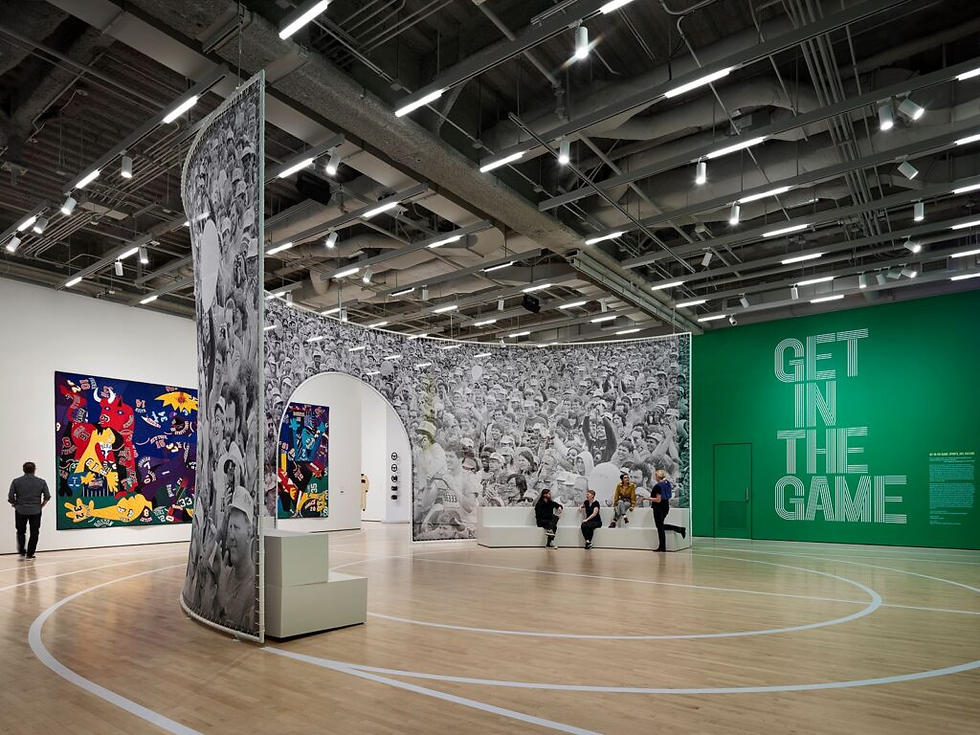
In the past decade, the rise of social media built an experience economy where being there is the social currency. People do not visit places to receive content anymore. They visit to live inside it for an hour. The museum that understands this is starting a conversation with a new generation of visitors.
This is not an argument against scholarship or curation or the artifact itself. It is an argument that the container has to do more work than it used to. A great curatorial idea now needs an environment that holds it, a soundscape that conducts it, a digital layer that extends it past the walls. The story, the space, and the technology have to arrive together. When they do not, the visitor feels it before they can name it.
The audience has changed.
The most ambitious institutions are already there. They are commissioning artists across disciplines. They are integrating projection, sound, and reactive lighting into the permanent collection rather than treating it as a special exhibition gimmick. They are designing the lobby, the gift shop, the cafe, and the gallery as one continuous experience rather than four departments managed by four different vendors. They are building hybrid digital tours that begin before the visitor arrives and continue after they leave.
This requires a different kind of design partner. A team that can speak fluently to the curator, the architect, the technologist, and the operations director without losing the thread between them. A team that treats the building as a living story, not a venue with content inside it.
The museum of the next decade will live across physical galleries, digital layers, and virtual platforms as one connected ecosystem. A story might begin in a permanent collection, continue in the visitor's pocket, and end in a virtual space accessed from home. The director who understands how these layers comprise one experience will define the institution's next era. The director who treats them as separate budgets will keep watching attendance drift.
What does this require from you?
Audit your visitor journey for the encounter. Bring environmental design and creative technology into the curatorial conversation early, not at the end. Stop treating the digital experience as the marketing department's job. Hire for sensory fluency. Fund the integration, not the bolt-on.
The museum was the original immersive experience. It can be again.
LMNL Studio designs how cultural institutions live in the world. We integrate story, space, and technology into experiences audiences remember and return to. If you are building the museum of the next decade, we would like to think alongside you. Let's Chat.
